Creativity Self-Help Books
The creative process mysteriously emanates from the divine spark within each of us. It is no accident that so many of the world's religions have creation narratives, mythic tales of how the world began. Read more »
Recommended Self-Help Books on Creativity
 Art Is a Way of Knowing
Art therapist Allen gives excellent instructions on using image-making as a way to understand personal fears, dreams, and identity while giving us a look at her own life and image-making process. Especially useful for non-artists, this self-help book is for anyone interested in exploring creativity as a path to self discovery. 1995, Shambala
 The Artist's Way: A Spiritual Path to Higher Creativity
This perennial classic is based on the principle that creative expression is the natural direction of life. This self-help book leads you through a comprehensive 12-week program to recover your creativity from a variety of blocks, including limiting beliefs, fear, self-sabotage, jealousy, guilt, addictions, and other inhibiting forces, replacing them with artistic confidence and productivity. 2002, Jeremy P. Tarcher
 At a Journal Workshop: Writing to Access the Power of the Unconscious and Evoke Creative Ability
The Intensive Journal Process is a complex and systematic method for gaining self-insight by recording thoughts, dreams and significant events which are then used as focal points for meditation and written reflection in separate sections. This is a fascinating guidebook for those seriously committed to exploring journal writing as a means of self-discovery. 1992, Jeremy P. Tarcher
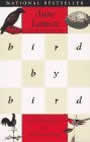 Bird by Bird: Some Instructions on Writing and Life

If you intend to read only one book on writing, then this is it. Bird by Bird is famous for Lamott's encouraging description of the writer's job: all one has to do is to write a "shitty first draft." She deepens the encouragement by revealing that all the successful published writers she knows, including herself, also write shitty first drafts. This is a very funny and profound self-help book, useful for writers, partners of writers and anyone interested in being introspective about life. 1995, Anchor Books
 Read David's extensive Book Review on Bird by Bird
 The Courage to Create
Believing that creativity is central to our being, May outlines the limits of what we know and do not know about creativity. He describes the creative process and the fearsome obstacles that must often be faced, and he defines courage as the willingness to take action despite despair. He further defines creativity as the willingness to be fully committed even while knowing one might be wrong. Tolerance for ambiguity is a key characteristic of creative personalities. This is a guidebook for a lifetime existential quest that includes much practical advice.2004, Norton
 The Creative Habit: Learn It and Use It for Life
"Creativity is not a gift from the gods," says Twyla Tharp, "bestowed by some divine and mystical spark." It is the product of preparation and effort and is within reach of everyone who wants to achieve it. All it takes is the willingness to make creativity a habit, an integral part of your life: in order to be creative you have to know how to prepare to be creative. Her self-help book includes an array of exercises to help one lay the groundwork for creativity. 2005, Simon and Schuster
 The Creative Process: Reflections on the Invention of Art
Carl Jung said, "Art is a kind of innate drive that seizes a human being and makes him its instrument. To perform this difficult office it is sometimes necessary for him to sacrifice happiness and everything that makes life worth living for the ordinary human being." This unique anthology brings together material from thirty-eight well-known writers, artists, and scientists who attempt to describe the process by which original ideas come to them. Contributors include Einstein, Mozart, Kipling, Max Ernst, Jung, and Henry Miller. 1996, University of California Press
 Creativity: The Psychology of Discovery and Invention
Drawing on 100 interviews with exceptional people, Dr. Csikszentmihalyi explores the creative process, seeking to understand what leads to moments of discovery, whether it is the excitement of the artist at the easel or the scientist in the lab. The author suggests that most creative people have dialectic personalities: smart, yet naive, both extroverted and introverted, etc. He discusses such ideas as why creative individuals are often seen as selfish or arrogant and why the tortured genius is largely a myth. He emphasizes that creativity needs to be cultivated and is necessary for the future of our country, if not the world. 2013, Harper Perennial
 Creators on Creating: Awakening and Cultivating the Imaginative Mind
In this collection of essays by some of the world's most renowned creative types, we learn over and over that the act of creation is a willingness to encounter the unknown. The authors emphasize that we will never meet our potential unless we risk losing control and wallow in the murky depths of our beings. Laurence Oliver talks about going naked. Federico Fellini extols the virtue of passion. Mary Shelley speaks openly about the genesis of Frankenstein. This self-help book is an inspirational collection of reflections on creative expression and its significance in human life. 1997, Jeremy P. Tarcher
 Effortless Mastery: Liberating the Master Musician Within
This is a self-help book for any musician who feels he or she has reached a plateau in their development. Werner, a masterful jazz pianist, uses his own life story and experiences to explore the barriers to creativity and mastery of music and in the process reveals that "Mastery is available to everyone," providing practical, detailed ways to move towards greater confidence and proficiency in any endeavor. The book also includes an audio CD of meditations. 1996, Jamey Aebersold
 Free Play: Improvisation in Life and Art
This self-help book is directed toward people in any field who want to contact, honor, and strengthen their own creative powers. It integrates material from a wide variety of sources among the arts, sciences, and spiritual traditions of humanity. The book reveals how inspiration arises within us, how that inspiration may be blocked, and how finally it can be liberated so that we can speak or sing, write or paint, dance or play, with our own authentic voice. 1991, Jeremy P. Tarcher
 Drawing on the Right Side of the Brain: The Definitive 4th Edition
The world's most widely used drawing instruction guide has helped people from all walks of life -- artists, students, corporate executives, architects, real estate agents, designers, engineers -- to apply its revolutionary approach to problem solving. The Los Angeles Times said that this is "not only a book about drawing, it is a book about living." 2012, Tarcher, 4th Edition
 Transforming Depression: Healing the Soul Through Creativity
Dr. Rosen applies Carl Jung's method of active imagination to treating depressed and suicidal individuals. Having dealt with depression in his own life, Dr. Rosen shows that when people learn to confront the rich images and symbols that emerge from their struggles, they can turn their despair into a fountain of creative energy. 2002, Nicolas-Hays
 The War of Art: Break Through the Blocks and Win Your Inner Creative Battles
Best selling author Steven Pressfield shows readers how to identify, defeat, and unlock the inner barriers to creativity. The War of Art is an inspirational, funny, well-aimed kick in the pants, guaranteed to galvanize every would-be artist, visionary, or entrepreneur. 2012, Black Irish Entertainment LLC
 The Zen of Creativity: Cultivating Your Artistic Life
"Naturalness, spontaneity, and playfulness are all aspects of the ordinary mind that catches a glimpse of the world of things just as they are," writes Loori, the founder and abbot of Zen Mountain Monastery in New York. This self-help book describes how in Zen the seemingly different pursuits of awakening and creative expression are actually kindred: the real aim of artistic expression is to point the way to the truth. This book is a fresh and persuasive guide to the art of waking up to the beauty and mystery of our own lives. 2004, Ballantine Books